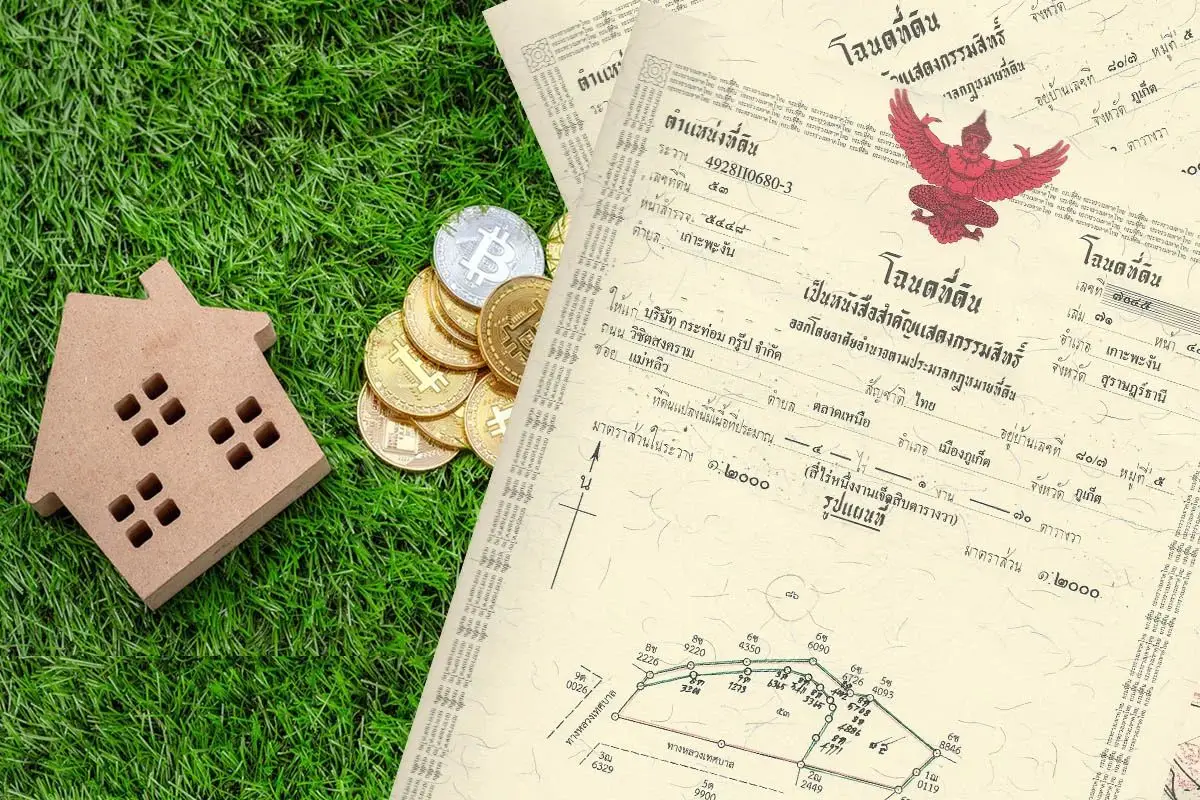
When buying property in Thailand, one of the most important factors, often more important than the house itself, is the land title.
Many problems faced by foreign buyers come not from the property, but from misunderstanding land title types.
Among all title deeds in Thailand, Chanote (Nor Sor 4 Jor) is considered the strongest, safest, and most secure form of ownership.
This guide explains what Chanote title is, why it matters, and what foreigners should know before buying or leasing property in Thailand.
What Is Chanote Title?
A Chanote title is a land ownership document issued by the Thai Land Department that provides:
- Exact land boundaries measured by GPS
- Official government recognition of ownership
- Full legal rights to sell, lease, mortgage, or transfer the land
Chanote land has been:
- Accurately surveyed
- Registered at the Land Office
- Verified against neighboring plots
This makes it the highest level of land ownership in Thailand.
Why Chanote Is Important for Foreign Buyers
Foreigners cannot own land directly in Thailand, but Chanote title is still extremely important, because it determines:
- Whether a long-term lease can be registered
- Whether a house can be legally built
- Whether the property can be sold or transferred easily
- Whether financing or legal protection is possible
Without Chanote, foreign buyers face higher legal risk and uncertainty.
Chanote vs Other Land Titles
1. Chanote (Nor Sor 4 Jor) – ⭐ Recommended
- Clear boundaries
- Fully transferable
- Best for buying, leasing, or investment
2. Nor Sor 3 Gor
- Confirmed boundaries
- Can usually be upgraded to Chanote
- Acceptable with proper due diligence
3. Nor Sor 3
- Less precise boundaries
- Requires caution
- Upgrading recommended before investment
4. Sor Kor 1
- Possessory right only
- Not recommended for foreigners
- High risk
5. Por Bor Tor 5
- The land is not legally owned
- Boundaries are not officially surveyed
- The land cannot be sold legally
- The land cannot be leased or registered at the Land Office
Can Foreigners Lease Chanote Land?
Yes.
Foreigners can legally lease Chanote land for up to 30 years, registered at the Land Office.
Benefits include:
- Legal enforceability
- Stronger protection
- Ability to register the lease officially
- More confidence for resale of the lease interest
This is the preferred structure for villas and houses in Koh Chang.
Can a House Be Owned Separately from Chanote Land?
Yes.
In many cases:
- The land is leased
- The house is owned by the foreign buyer
This must be documented correctly and registered where applicable.
Proper contracts are essential.
Common Mistakes Foreign Buyers Make
❌ Assuming all land titles are the same
❌ Buying based on verbal assurances
❌ Skipping Land Office checks
❌ Not verifying access roads
❌ Not registering leases properly
These mistakes often lead to disputes or loss of rights.
Why Chanote Matters Especially in Koh Chang
Koh Chang has:
- National Park restrictions
- Zoning regulations
- Limited development land
Chanote land in Koh Chang:
- Holds value better
- Is easier to sell or lease
- Is more attractive to foreign buyers and investors
This makes Chanote even more critical on islands.
How Koh Chang Properties Protects Our Clients
We:
- Verify land titles directly with the Land Office
- Explain ownership and lease structures clearly
- Work with qualified legal professionals
- Ensure contracts are registered correctly
Our priority is clarity, legality, and long-term protection for our clients.
Final Thoughts
Chanote title is not just a document—it is your foundation of security in Thailand’s property market.
Understanding land titles before committing to any property can save you time, money, and stress.
If you are considering buying, leasing, or investing in Thailand, always start with the title deed.



เข้าร่วมการสนทนา